Sunday, 3 July 2016

Week 4: Medicine + Technology + Art

Outside of academics, I am researching at a neurovascular imaging lab. In my research I investigate the relationship between disease-related text reports and their corresponding images. The intersection of medicine and technology is immediate in our current society, as many hospitals have adopted research into their operations, allowing patients to participate in new forms of treatment using novel technologies. Modern concepts like medical imaging and chemotherapy has proven to be effective in assisting the diagnosis and treatment of patients. The marriage between medicine and technology has already been applied by healthcare pioneers such as IBM's Watson, which aims to use machine learning methods to assist in different aspects of healthcare.

IBM Watson, a machine learning-powered software that could revolutionize healthcare 
The goal of my research is to create a predicative model that can create a diagnosis and treatment plan for stroke patients based on their medical imaging. This model very much resembles the Artificial Intelligence in Steven Spielberg's 2001 film, A.I., in particular the robotic teddy bear, Teddy, who takes the initiative to care for a child's wellbeing. Spielberg's film is a modern adaptation of the concept of medical technology in an art form, and was well received by audiences. More recently, the film Big Hero 6 also depicted the concept of an AI personal healthcare assistant, through the main character Baymax. This demonstrates the popularity of medical technology among artists and the general anticipation for such innovation in society.


The resource that most influenced me from this week's material was researcher and psychology professor Virgil Wong's experimentation with a 'Psychiatric Robot Analyst' using neuroimaing techniques. His work with fMRI images reminded me of the image data I processed in my research, and expanded my horizons on the possible artistic and scientific work that can be done with existing medical information. I have seen many working on fMRIs but few in the field of psychology.
I found it interesting how medical images can also become a medium for art and expression.
Wong uses fMRI scans to investigate the psychological states of participants 
This brings me to the question of whether we can incorporate artificial intelligence into art forms, not as subjects but as composers. I have seen neural networks create paintings, but to which state should we begin crediting these works as works by AI themselves, or by its creators?

Sources:
"A.I. Artificial Intelligence." Wikipedia. Wikimedia Foundation, n.d. Web. 04 July 2016. 


Wong, Virgil. "Psychiatric Robot Analyst With Neuroimaging – Virgil Wong." Psychiatric Robot Analyst With Neuroimaging. VW, n.d. Web. 04 July 2016. 

"IBM Watson Healthcare Collaboration with Cleveland Clinic - Technology Org." Technology Org. N.p., 08 Aug. 2013. Web. 04 July 2016. 

Denmead, Ken. "The Technology of Big Hero 6 - GeekDad." GeekDad. N.p., 01 Oct. 2014. Web. 04 July 2016.

"Flexible, Conductive, Pressure Sensing Electronic Skin |." Medgadget. N.p., 28 June 2016. Web. 04 July 2016. 

Media:"A.I. Artificial Intelligence - the Significance of Teddy (film Analysis)." YouTube. N.p., n.d. Web. 04 July 2016. 

"IBM Watson Healthcare Collaboration with Cleveland Clinic - Technology Org." Technology Org. N.p., 08 Aug. 2013. Web. 04 July 2016. 

Wong, Virgil. "Psychiatric Robot Analyst With Neuroimaging – Virgil Wong." Psychiatric Robot Analyst With Neuroimaging. VW, n.d. Web. 04 July 2016. 

Week 3: Robotics and Art

This week‘s topic was particular exciting for me, as the lectures dive deeper into the field of information technology and industrialization.

As Professor Vesna mentioned in her first lecture of robotics, the technology of movable type, introduced by Gutenberg to the western society in the sixteenth century, transformed the speed and breadth of knowledge precipitation, and advanced the growth of many other fields such as religion through religious manuscripts, science through textbooks, and art through the mass-publication of literature.
The Gutenberg Bible - a product of the movable type  
I found this phenomenon of knowledge production and its results to be fascinating. The theme of robotics and mechanization reminded me of a recent film I watched - The Imitation Game by Morten Tyldum. This film was a biography of Alan Turing, an English computer scientist whose enigma machine led the British army to deciphering Nazi coded messages during the Second World War and the Allies to their eventually victory.


The enigma, otherwise known as the turing machine, is a perfect example of how industrialization enabled the mass-processing power and early "intelligence" of the embryonic computer. However, although this machine had allowed for the success of defeating a nation, people were nevertheless doubtful of its capabilities - or even the feasibility of its creation - prior to its birth. The English officials initially opposed the idea of relying on mechanical power, and wanted to abolish the mission. However, the enigma's eventual success convinced society that computational power is not only revolutionary, but crucial to the development of future technology. This has been proven right, as the algorithms and designs that were embedded in the earliest enigma soon became the foundation for greater computational power and information trading. Now, not only is knowledge produced mechanically on the medium of paper, it is distributed electronically through the digital screens and internet, allowing information to be created and distributed like never before.

The next step to robotics and mechanization is of course, artificial intelligence. While preexisting robots can handle physical labor, society, especially the technology industry, is aiming for artifically-intelligent robots that can interpret and follow commands. On a more ambitious note, society is interested in robots that can learn from the wealth of human information and knowledge that has accumulated since the birth of civilization to the boom of industrialization. Through utilizing existing information, we are able to process information in a near-human way and move a step closer to the high-functioning robots of the future.

Sensay, a web-based chatbot assistant

Microsoft's XiaoBing, a wechat-based AI that uses machine learning to interact with users
Sources:Norman, Jeremy. "Relating the Rapidly Changing Present to the Distant Past as Far as Book History Is Concerned." Relating the Rapidly Changing Present to the Distant Past as Far as Book History Is Concerned. History of Information, n.d. Web. 03 July 2016. 

"Alan Turing." Wikipedia. Wikimedia Foundation, n.d. Web. 03 July 2016. 


Uconlineprogram. "Robotics Pt1." YouTube. YouTube, 15 Apr. 2012. Web. 03 July 2016. 


"Machine Learning." UofT Machine Learning Home Comments. N.p., n.d. Web. 03 July 2016. 


"Sensay." Medium. N.p., n.d. Web. 03 July 2016. 


Media:Zhang, Charlotte. Have You Met Cortana’s Little Sister XiaoBing, the Jolly Chat Robot by Microsoft? Digital image. Lab Brand. Lab Brand, n.d. Web. 


Marshall, Matt. Sensay, a Chatbot for Getting Help with Any Task, Passes 1 Million Users. Digital image. Venture Beat. Venture Beat, n.d. Web. 


"Gutenberg Bible." Wikipedia. Wikimedia Foundation, n.d. Web. 03 July 2016. 


Worldsciencefestival. "The Enigma Machine Explained." YouTube. YouTube, 14 May 2013. Web. 03 July 2016. 


Sunday, 26 June 2016

Week 2: Math and Art

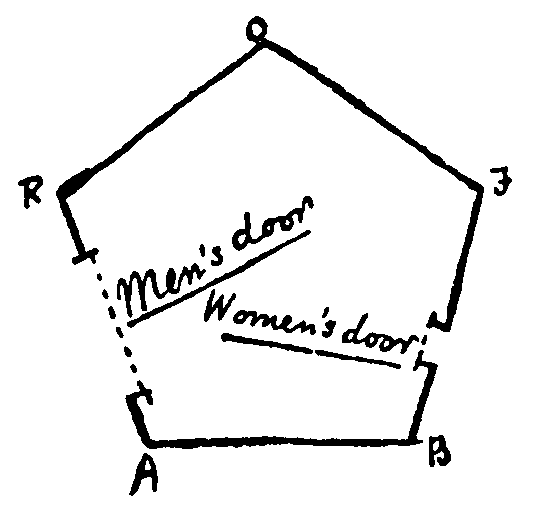
This week's material was especially intriguing when I reflect back to the Discrete Math course I took last quarter. Although the course covered mostly abstract induction, probability, and graph theory, the notion of math being the foundation for art was very logical. My favorite piece of material from this week's resources was Edwin Abbott's Flatland illustrations and stories, in which he uses mathematical diagrams to depict the relationship between members of society in Victorian England in order to "advance the cause of education".

Abbott's graphic illustration of men's and women's doors
I admire the creativity, artistic talents, and above all, the sense of purpose in his work. I also found the Ron Eglash's African Fractals to be beautiful and eccentric, and the properties of repetition and sequence that I learned in my Discrete Math course really came into play.

Eglash's demonstration of African fractals
Lastly, I loved the idea of math+music, and the manipulation and synthesis of properties of sound brought me back to a video that I recently watched, where a pianist recreated the irrational number pi into a piece of music, by converting each digit into a note of the octave, and adding harmonies on the left hand.
 

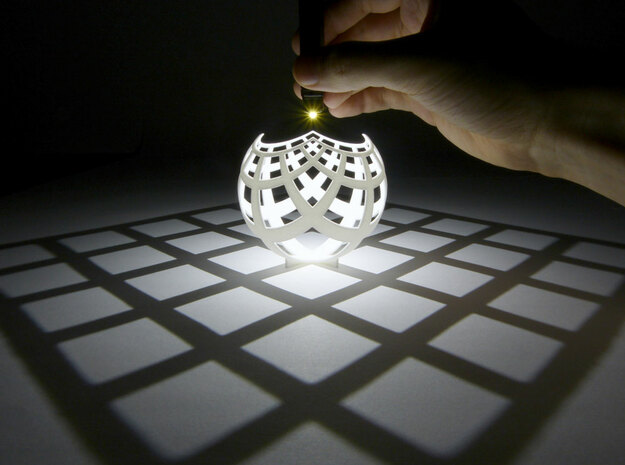
The topic of math and science first brought me back to a purchase I made online, of a 3D-printed stereographic projection made by Henry Segerman, a Mathematician and mathematical artist working in 3 dimensional geometry and topology. Using properties of dimensional analysis and astrology, the project maps a grid plane through a sphere using a light source.This is a perfect example of how math influences art, when the art piece itself is an aesthetically pleasing representation of a scientific concept. Through the artist's own calculation and design, he was able to bring this concept to life with a 3D printer.

Grid (Stereographic Projection) by @henryseg

Lastly, I believe that the juxtaposition between math, art, and science could be explained through a mathematical concept itself. Mathematical concepts are a subset of the set of science, however, each subset within science contains some elements of math. Art is another distinct set that shares common elements with both math and art, as many art pieces exhibit influences of math and science. Fractals, the golden ratio, and mathematical origami are all examples of elements from the union of all three subjects.

Square, A. "Section 2 Of the Climate and Houses in Flatland." 2, Flatland, by E. A. Abbott, 1884. N.p., n.d. Web. 27 June 2016.  
 
"Music and Computers." Music and Computers. Columbia University, n.d. W
eb. 27 June 2016.  
 
Eglash, Ron. "African Fractals." African Fractals. N.p., n.d. Web. 27 June 2016.
 
Segerman, Henry. "Grid (stereographic Projection) by Henryseg on Shapeways." Shapeways.com. N.p., n.d. Web. 27 June 2016. 
 
Lang, Robert J. "Robert J. Lang Origami." Robert J. Lang Origami. N.p., n.d. Web. 27 June 2016.
 

Week 1: Two Cultures

"There is still much work to be done to build a bridge between the humanities and the sciences."
-Victoria Vesna, Toward a Third Culture: Being in Between

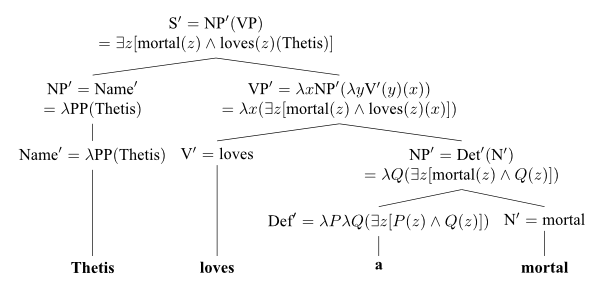
When I encountered this quote from this week's selected reading, I was immediately reminded of my own areas of studies - Linguistics and Computer Science. Whenever I tell people my major, I am often asked whether I am double majoring in Linguistics and Computer Science. Therefore, I often have to explain why two seemingly irrelevant subjects are actually the components of one unique major. This collaboration, or collision between a humanities and a science, is truly an unexpected one. However, one might just find that the building blocks of linguistics - the morphemes, phonemes, and grammatical structures - make and break certain laws and algorithms in programming languages. Take the process that make up natural language - our everyday communication, and apply computational power to it - we arrive at a "third culture" - natural language processing, a subfield of artificial intelligence.

Using computational algorithms and linguistic structures to analyze text


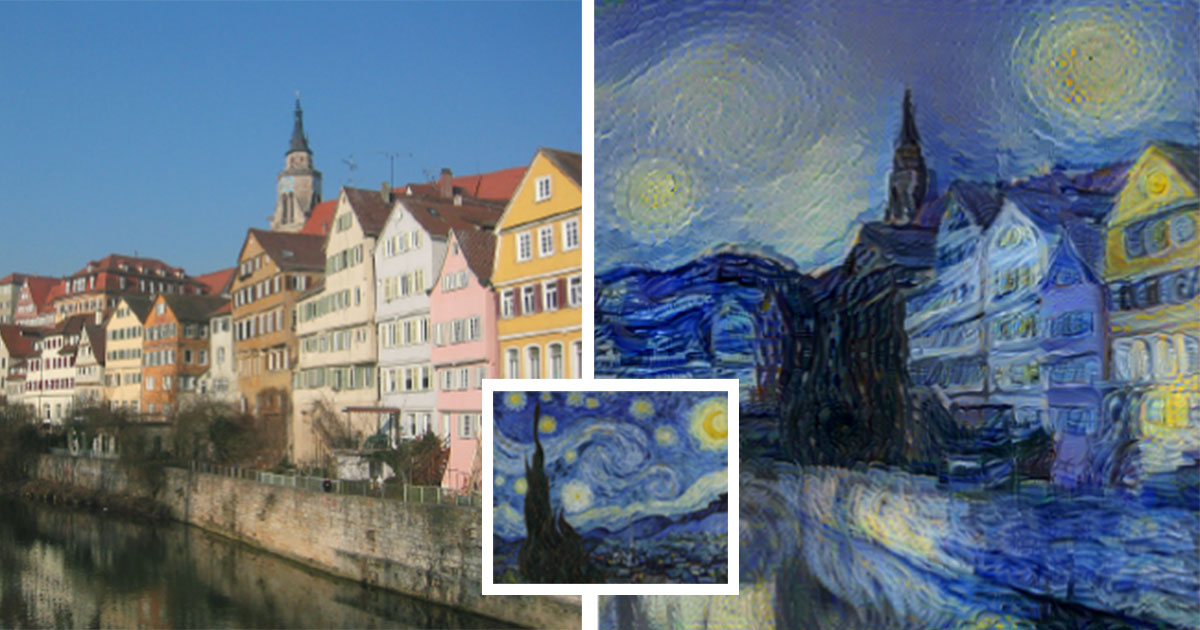
As mentioned in lecture, "scientists are isolated from the movements of philosophical thought and contemporary artistic expression." This is one of the reasons for why computational linguistic is one of the lesser-explored fields of AI: people simply do not relate words - the medium that channel emotion and thought - to computer science, a tool that seems too cold and hardwired to express human sentiment. However, recent research in deep learning - another statistical method, has shown that, given enough artistic data, a computer program might just be able to imitate the art piece - be it a painting, a Shakespeare play, a scene from Friends, or a piece of music.

Recurrent Neural Networks allow paintings to be generated in a certain artistic style
This third culture invites us to examine the possibilities of engaging artists and humanities scholars with the tool of programming; maybe Computer Science as a distinct major is an educational paradigm in itself, and instead of producing graduates whose only focus are accuracy an efficiency, we should give all students the tool of programming to explore and express their creative abilities.


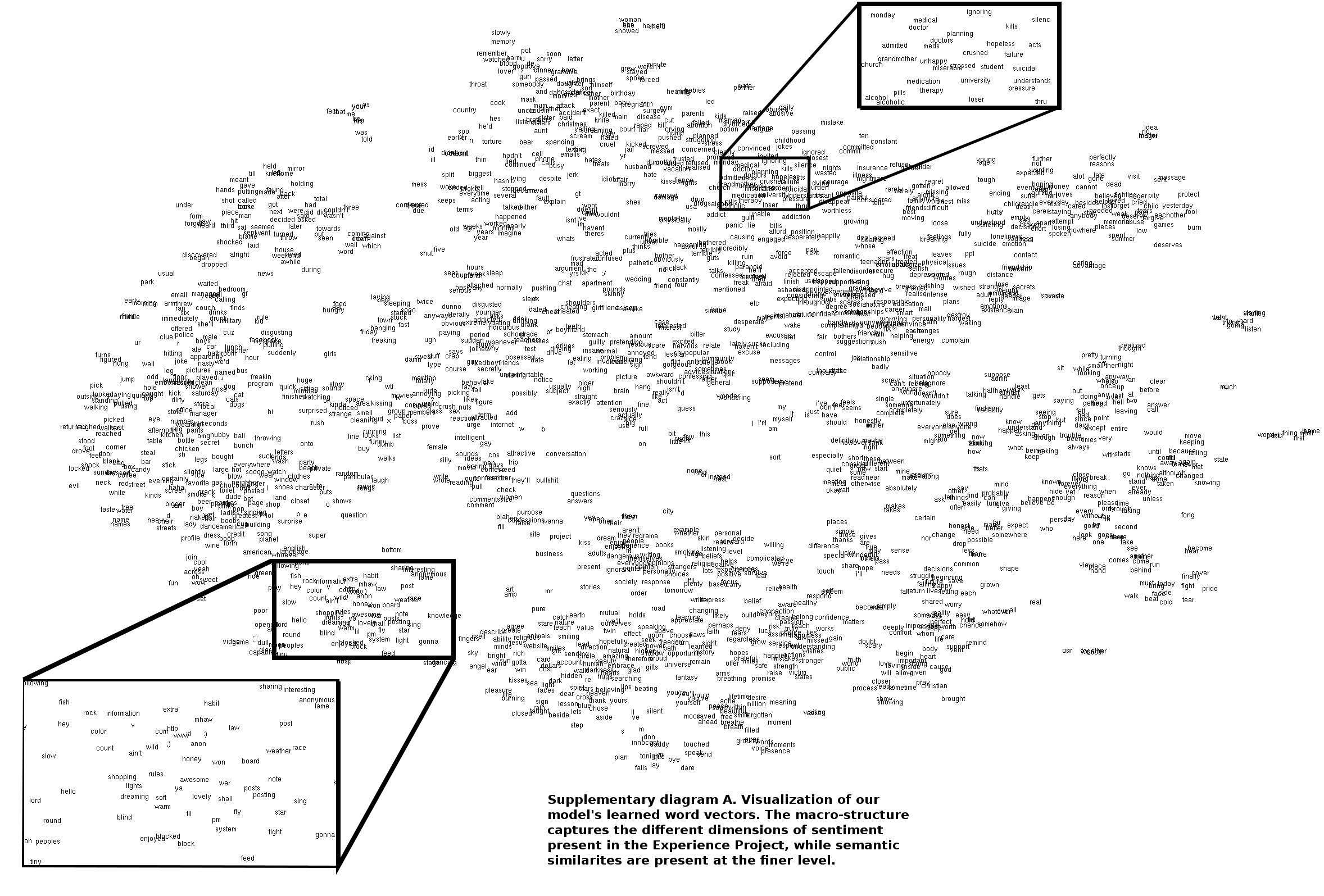
Visualization of Word Vectors In Relation to Sentiment
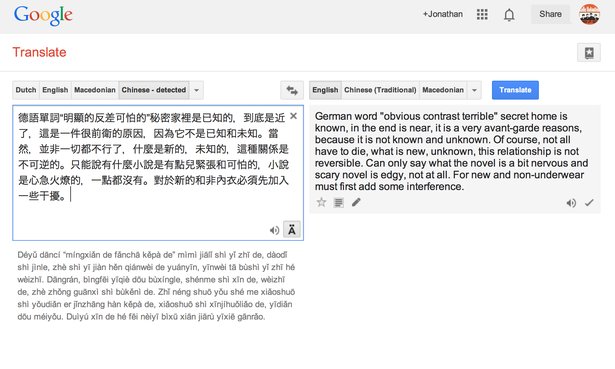
C.P. Snow's experience with writer and scientist colleagues reminded me of my recent interest in machine translation. The polarized spectrum within society's intellectual population suggests that it is difficult for linguists, interpreters, and translators to work with mathematicians, statisticians, and software engineers. However, expertise in both fields is what will bring about great products that day-to-day civilians may enjoy.

Google Translate

This week's reading inspired me to think deeper about the necessity for collaboration and communication between these 'polar' intellectuals. As our society transitions from the industrial revolution to the technological revolution, trends like "Internet of Things" invites us to entertain the possibility of integrating technology into not one aspect, but all aspects of our daily lives. Therefore, it must be necessary to introduce the new culture - one that acknowledges science as a means of expression.


Snow, C. P. The Two Cultures and the Scientific Revolution. New York: Cambridge UP, 1959. Print.


Vesna, Victoria. "Toward a Third Culture: Being In Between." Leonardo. 34 (2001): 121-125. Print.
Bird, Steven., E. Klein, E. Loper. "Natural Language Processing with Python." NLTK Book. n.d. Web. 27 June 2016.  
Morgan, Jacob. "A Simple Explanation Of 'The Internet Of Things." Forbes. Forbes Magazine, n.d. Web. 27 June 2016. 
"Intel IoT -- What Does The Internet of Things Mean?" YouTube. Intel, n.d. Web. 27 June 2016.